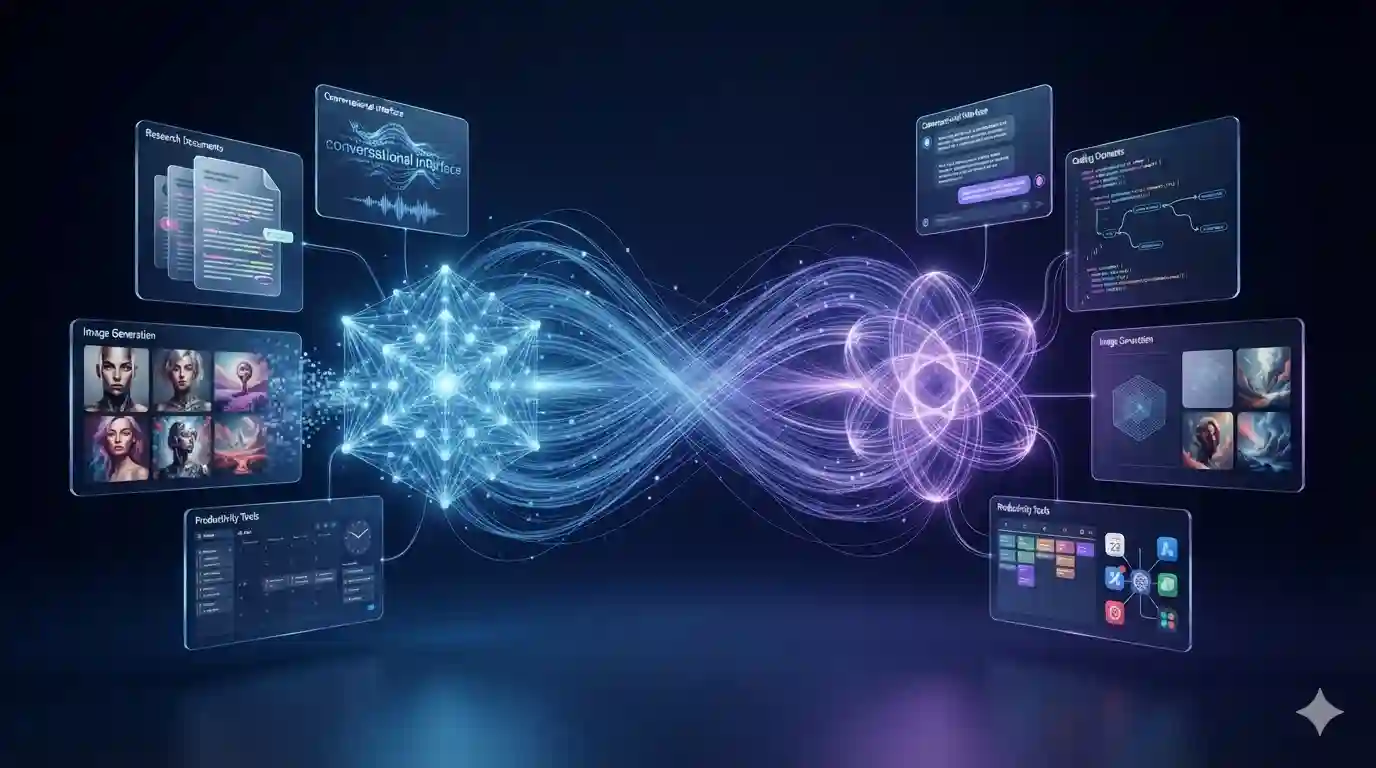


Artificial intelligence has moved far beyond simple chatbots that answer questions. In 2026, two terms appear constantly across the AI industry: AI assistants and AI agents.
At first glance, they may seem like the same technology. Both use artificial intelligence to understand instructions, generate information, solve problems, and help people complete tasks. But the way they operate can be very different.
An AI assistant generally works with you during a task. You ask a question, provide instructions, review the response, and decide what happens next.
An AI agent, by contrast, can be given a broader goal and then take multiple steps toward completing it. Depending on the system and permissions available, an agent may search for information, use tools, interact with files or applications, execute actions, check results, and continue working with less step-by-step direction.
That difference—assistance versus delegated execution—is becoming increasingly important.
OpenAI describes agentic AI as changing knowledge work from short, individual interactions toward delegated, longer-horizon tasks. Its 2026 research on Codex found users increasingly assigning tasks estimated to require more than an hour of human work.
Microsoft’s 2026 Work Trend Index similarly describes a shift in which agents take on more execution while people increasingly focus on setting direction, exercising judgment, and taking responsibility for outcomes.
So, what exactly is the difference between AI agents vs AI assistants, and when should you use each one?
This guide explains how both technologies work, where they overlap, their advantages and limitations, and why the distinction matters in 2026.
What Is an AI Assistant?
An AI assistant is an artificial intelligence system designed primarily to help a person complete tasks through direct interaction.
The human usually remains in control of the workflow.
You might ask an AI assistant to:
- explain a complicated topic;
- summarize a document;
- draft an email;
- brainstorm ideas;
- rewrite an article;
- analyze information;
- generate code;
- create a project outline;
- translate text;
- compare different options.
The assistant processes your request and returns a result. You then decide whether to accept the response, modify the instructions, ask another question, or perform the next action yourself.
This makes AI assistants particularly useful when human judgment and frequent interaction are important.
OpenAI’s guidance on workspace agents contrasts this familiar pattern with agentic workflows, noting that many people already use AI for one-off activities such as drafting, summarizing, brainstorming, and answering questions.
A Simple AI Assistant Example
Imagine you are preparing a marketing campaign.
You could ask an AI assistant:
“Give me ten ideas for a social media campaign promoting a new mobile app.”
The assistant generates the ideas.
You might then say:
“Turn idea number four into a one-week content calendar.”
The AI responds again.
You review it and decide what to do next.
In this workflow, you are directing nearly every important step.
That is the traditional assistant model.
What Is an AI Agent?
An AI agent is an AI system designed to pursue a goal by performing a sequence of actions rather than simply producing a single response.
Instead of telling the AI exactly what to do at every stage, you may provide an objective such as:
“Research our three main competitors and prepare a comparison report.”
An appropriately equipped agent could potentially break that objective into several steps:
- Identify the relevant competitors.
- Search approved information sources.
- Collect useful data.
- Organize the findings.
- Compare products or services.
- Create a report.
- Review the result against the original objective.
- Return the completed work for human approval.
The exact capabilities depend heavily on the particular agent, its tools, permissions, integrations, model, and environment.
This ability to perform multi-step workflows toward a goal is one of the defining characteristics of agentic AI.
OpenAI says agents can operate independently for minutes or hours while orchestrating tool calls, interacting with environments, and iterating toward solutions.
AI Agents vs AI Assistants: What Is the Main Difference?
The easiest way to understand AI agents vs AI assistants is to think about who manages the workflow.
With an AI assistant:
Human → Instruction → AI response → Human decision → Next instruction
With an AI agent:
Human → Goal → AI plans/actions → AI uses tools → AI checks progress → Human reviews or intervenes
This distinction is not absolute. Modern AI products increasingly combine assistant and agent capabilities, so there is a spectrum rather than a perfectly clean boundary.
Still, the comparison is useful.
| Feature | AI Assistant | AI Agent |
|---|---|---|
| Primary role | Help the user | Pursue a goal |
| Typical interaction | Prompt and response | Multi-step workflow |
| Human involvement | Usually frequent | Can be less frequent |
| Tool usage | Possible | Often central |
| Planning | Usually limited to the interaction | May plan multiple steps |
| Task duration | Often short | Can be longer |
| Autonomy | Generally lower | Generally higher |
| External actions | Often limited | Can be extensive when authorized |
| Best suited for | Advice, creation, analysis | Execution and workflows |
| Human oversight | Important | Especially important for consequential actions |
The important point is that autonomy does not mean unlimited independence.
Responsible agent systems still need permissions, constraints, monitoring, and appropriate human oversight.
How Do AI Assistants Work?

Modern AI assistants are typically built around large AI models capable of understanding natural-language instructions.
A basic workflow looks like this:
User input → AI processing → Generated response → User review
Suppose you ask:
“Summarize this 20-page report into five key points.”
The assistant analyzes the available document and generates the requested summary.
You can then continue the conversation:
“Explain point three in simpler language.”
The assistant uses the conversation context and responds.
This conversational approach makes AI assistants extremely flexible.
They are especially effective for tasks where the user wants to think with AI rather than delegate an entire workflow to it.
How Do AI Agents Work?

AI agents generally add several capabilities around the underlying AI model.
A simplified architecture might include:
Goal → Planning → Tools → Actions → Observation → Evaluation → Next action
Instead of generating one response and stopping, the agent may continue working until it reaches a stopping condition, needs approval, encounters an error, or completes its objective.
1. The User Defines a Goal
The process starts with an objective.
For example:
“Analyze customer feedback from this month and prepare a report showing the most common complaints.”
2. The Agent Breaks Down the Task
The system may determine that it needs to:
- locate customer feedback;
- organize the data;
- classify complaints;
- calculate common themes;
- identify patterns;
- prepare a summary;
- create the final report.
3. The Agent Uses Available Tools
Depending on permissions, agents may work with tools such as:
- web browsers;
- search systems;
- databases;
- spreadsheets;
- code environments;
- business applications;
- internal knowledge bases;
- files and documents;
- APIs.
This is a major difference between a simple chatbot and a capable agent.
4. The Agent Evaluates Progress
After completing an action, an agent may examine the result and determine what should happen next.
For example:
Search → analyze → notice missing information → search again → compare → prepare output
This creates a feedback loop.
5. The Human Reviews the Outcome
Human oversight remains important, particularly when agents interact with external systems or make consequential changes.
The goal is not necessarily to remove humans from workflows. Instead, agentic systems can change the human role from performing every individual step to directing, supervising, and validating the overall process.
Microsoft’s 2026 research emphasizes this point: advanced users increasingly delegate routine execution, research, and synthesis while retaining responsibility for direction and outcomes.
AI Assistants Are Moving Beyond Simple Chatbots
One reason AI agents vs AI assistants can be confusing is that modern AI assistants are themselves becoming more capable.
The old chatbot model was simple:
Question → Answer
Modern systems can potentially work with documents, search information, analyze data, use connected tools, and support sophisticated reasoning workflows.
As those capabilities increase, the boundary between assistant and agent becomes less obvious.
A single AI product may behave like an assistant during one interaction and perform agent-like work during another.
This means the better question is often not:
“Is this product an assistant or an agent?”
Instead, ask:
“How much of this workflow can the system execute independently, and what permissions does it have?”
AI Agents Can Handle Longer Workflows
Task duration is another important distinction.
AI assistants are commonly used for relatively short interactions:
- answer this question;
- summarize this page;
- rewrite this paragraph;
- explain this spreadsheet;
- create five ideas.
AI agents can be designed for longer tasks involving multiple dependent steps.
OpenAI’s June 2026 analysis of Codex usage illustrates this shift. Among sampled individual users in May 2026, 80.6% had made at least one request estimated to represent more than 30 minutes of human work, while 70.2% had made at least one estimated to exceed an hour.
These figures are specific to the sampled Codex users studied by OpenAI, so they should not be interpreted as representing every AI user. They nevertheless demonstrate how agentic systems can support significantly longer task horizons than traditional chatbot interactions.
AI Assistants for Everyday Productivity
AI assistants remain extremely valuable because many everyday tasks do not require autonomous execution.
Imagine you are writing a business proposal.
An assistant can help you:
- create an outline;
- improve the introduction;
- rewrite complicated sentences;
- identify missing arguments;
- summarize research;
- create headings;
- check consistency;
- brainstorm alternatives.
You remain directly involved throughout the process.
For many professionals, that is exactly what they need.
AI assistants are therefore closely connected to the broader rise of AI productivity in 2026, where AI is increasingly used as a collaborative tool for research, writing, communication, planning, and analysis.
AI Agents for Business Workflows

AI agents become particularly interesting when a task involves repeated steps across different tools.
Consider a sales workflow.
A traditional AI assistant might help a salesperson write a follow-up email.
An agentic workflow could potentially:
Collect approved lead data → research the company → organize relevant information → draft personalized outreach → update records → prepare the next action for review
Whether every step should actually be automated depends on the business, data sensitivity, system permissions, and required human approvals.
But the key difference is clear.
The assistant helps with an individual task.
The agent can potentially coordinate the workflow surrounding the task.
OpenAI reported in August 2026 that enterprise use was increasingly moving from assistance toward execution. In its enterprise data, agentic usage had expanded beyond software development into areas including legal, sales, recruiting, and marketing.
Real-World Uses of AI Assistants
AI assistants can support almost every knowledge-work profession.
Content Creation
Writers can use assistants for research, outlines, drafts, headlines, editing, and brainstorming.
Customer Support
Support teams can use AI to summarize customer issues, suggest answers, retrieve relevant information, and draft responses.
Education
Students and professionals can use AI assistants to explain difficult concepts, create practice questions, summarize material, and explore topics.
Programming
Developers can ask AI to explain code, identify potential problems, generate examples, and discuss implementation approaches.
Business Research
AI assistants can help summarize reports, organize information, compare alternatives, and turn complex information into understandable explanations.
These activities normally benefit from active human involvement.
Real-World Uses of AI Agents
Agents become more useful when work requires a sequence of actions.
Potential applications include:
Research Agents
A research agent could collect information from permitted sources, compare findings, organize evidence, and prepare a structured report.
Coding Agents
Coding agents can work on broader software tasks involving code changes, testing, debugging, and iteration.
OpenAI’s Codex research is a prominent example of this direction, with the company documenting increasingly long-running delegated software and knowledge-work tasks.
Data Analysis Agents
An agent might gather approved datasets, clean information, run analyses, generate visualizations, and prepare reports.
Customer-Service Agents
Properly configured agents may retrieve account information, consult knowledge bases, perform approved actions, and escalate complicated cases to humans.
Operations Agents
Businesses could use agents to coordinate repetitive processes involving multiple internal systems.
Marketing Agents
Agentic workflows may support research, campaign preparation, content organization, performance analysis, and reporting.
The important word is workflow.
Agents are most valuable when multiple connected actions need to happen.
AI Agents vs Automation: They Are Not the Same
Traditional automation and AI agents are also frequently confused.
Traditional automation generally follows predefined logic:
If X happens → perform Y
For example:
When someone submits a contact form, send a confirmation email.
The workflow is explicitly configured in advance.
An AI agent can potentially operate with more flexibility.
Instead of defining every individual step, you may define a broader goal and allow the agent to determine some of the intermediate actions.
That makes agentic systems useful in situations where workflows involve ambiguity, changing information, or decision points that are difficult to express through rigid rules.
However, traditional automation remains preferable for many predictable processes because it can be simpler, cheaper, easier to test, and more deterministic.
Agentic AI should not automatically replace conventional automation.
AI Agents vs AI Assistants for Small Businesses
Small businesses do not necessarily need complex autonomous systems.
AI assistants can already provide considerable value by helping with:
- emails;
- marketing copy;
- customer FAQs;
- business proposals;
- research;
- social media ideas;
- document summaries;
- website content;
- data interpretation.
Agents become more attractive when the business has repeatable workflows involving multiple systems.
For example, a small company might eventually use agents to help organize leads, prepare reports, process internal documents, or coordinate routine administrative workflows.
The decision should be based on the complexity and risk of the task—not simply on whether “agentic AI” is newer.
Advantages of AI Assistants
AI assistants remain popular for several reasons.
Easy to Control
The human normally decides what happens after each response.
Flexible
The same assistant can help with writing, research, analysis, brainstorming, coding, and many other activities.
Fast Interaction
Users can receive immediate assistance without building complicated workflows.
Human Judgment Remains Central
Because people remain involved throughout the process, errors may be easier to identify before actions are taken.
Lower Workflow Complexity
For many tasks, a conversation is easier than building an autonomous system.
Limitations of AI Assistants
AI assistants also have limitations.
They often depend heavily on repeated user instructions.
A complex project may require dozens of interactions.
The user may need to:
- provide context repeatedly;
- move information between applications;
- execute actions manually;
- monitor every step;
- combine multiple AI outputs.
This is precisely where agents can become useful.
Advantages of AI Agents
Multi-Step Execution
Agents can potentially coordinate several actions within one objective.
Reduced Manual Coordination
Users may not need to instruct the AI after every small step.
Tool Integration
Agents can become much more useful when securely connected to relevant applications and data.
Longer Task Horizons
Some agent systems can work on tasks that require extended processing and iteration.
Parallel Work
Advanced systems may coordinate multiple agents or processes simultaneously.
OpenAI’s September 2026 Agents API, for example, describes infrastructure for long-running cloud agents that can manage context, use tools, coordinate subagents, work with files, run code, and preserve intermediate results.
Limitations and Risks of AI Agents
Greater autonomy also introduces greater responsibility.
Incorrect Actions
AI models can misunderstand instructions or generate incorrect information.
When AI only generates text, an error might simply produce a poor answer.
When an agent can take actions, the consequences may be more significant.
Security Risks
Agents connected to business systems may have access to sensitive information or powerful tools.
Organizations therefore need careful permission management.
An agent should generally receive only the access necessary to perform its job.
Privacy Concerns
Businesses need to understand what information an AI system can access, how that information is handled, and which third-party systems are involved.
Cascading Errors
A mistake early in a multi-step workflow can affect later steps.
For example:
Incorrect data → incorrect analysis → incorrect decision → incorrect action
Monitoring and validation are therefore essential.
Over-Automation
Not every decision should be delegated.
Legal, financial, medical, security-sensitive, personnel, or other high-impact decisions may require qualified human review and additional safeguards.
Human Oversight Is Becoming More Important, Not Less

A common assumption is that more powerful agents will eliminate the need for human involvement.
The emerging picture is more nuanced.
As AI performs more execution, human responsibilities can shift toward:
- defining objectives;
- setting constraints;
- deciding permissions;
- reviewing results;
- checking quality;
- resolving ambiguity;
- handling exceptions;
- making consequential decisions;
- taking responsibility for outcomes.
Microsoft’s 2026 Work Trend Index found that 86% of the surveyed AI users said they treated AI output as a starting point rather than a final answer. Quality control and critical thinking were also among the human skills respondents considered increasingly important as AI takes on more work.
This suggests that the future of agentic AI is not simply about removing people from workflows.
It is increasingly about changing where human attention is most valuable.
AI Agents vs AI Assistants: Which Should You Use?
There is no universal answer because the technologies solve different types of problems.
Use an AI assistant when you want active collaboration.
For example:
“Help me create a marketing strategy.”
Use an AI agent when you have an appropriate system and want to delegate a defined multi-step objective.
For example:
“Research these competitors using these approved sources, organize the findings using this template, and prepare a report for my review.”
For many workflows, the strongest approach may actually combine both.
You might discuss strategy with an assistant and then delegate clearly defined execution tasks to agents.
This creates a model of:
Human judgment + AI assistance + agentic execution
rather than treating assistants and agents as competing technologies.
Are AI Agents Replacing AI Assistants?
Probably not in the simple sense of one category disappearing.
Instead, the categories are increasingly blending together.
Modern AI products can combine:
- conversation;
- reasoning;
- memory/context;
- search;
- tools;
- application integrations;
- workflow execution;
- agents.
OpenAI’s ChatGPT Work, introduced in July 2026, illustrates this convergence. OpenAI describes it as an agent inside ChatGPT that can work across apps and files, break complex projects into smaller steps, and continue working on them for extended periods.
The familiar conversational interface may therefore remain while the technology operating behind it becomes increasingly agentic.
AI Agents vs AI Assistants and the Future of Work
The broader transition is from:
AI that generates → AI that collaborates → AI that executes
This does not mean every task will become autonomous.
Instead, different levels of AI involvement will likely coexist.
Simple questions may require only an assistant.
Complex projects may combine humans, assistants, specialized agents, traditional software, and automated workflows.
Microsoft’s 2026 research describes four broad modes of AI work—asking, exploration, collaboration, and delegation—depending on both human involvement and agent intensity.
That framework helps explain why AI agents vs AI assistants should not be viewed as a winner-versus-loser competition.
They represent different ways of working with increasingly capable AI systems.
How AI Search Could Connect With AI Agents
Another important development is the connection between agentic systems and search.
Traditional search engines primarily helped users locate information.
AI-powered search increasingly attempts to interpret questions, gather information from multiple sources, and synthesize useful answers.
Agents can extend this process further.
A future research workflow could look like:
Ask a question → search multiple sources → evaluate findings → gather additional information → analyze results → create a report → request human approval
This makes AI Search in 2026 an important part of the broader agentic AI ecosystem.
ChatGPT, Gemini and the Move Toward Agentic AI
Major AI platforms are also evolving beyond basic question-and-answer interactions.
This makes traditional product comparisons more complicated.
Users increasingly need to consider not only:
- response quality;
- writing ability;
- reasoning;
- multimodal capabilities;
but also:
- tool access;
- application integration;
- workflow execution;
- permissions;
- agent capabilities;
- human-control mechanisms.
Readers interested in the broader platform differences can also read our ChatGPT vs Gemini 2026 comparison.
For a closer look at ChatGPT itself, see our ChatGPT Review 2026.
What Should Businesses Consider Before Using AI Agents?
Businesses should avoid adopting agents simply because the technology is popular.
Before deploying an agent, ask:
What exact problem are we solving?
Then determine:
What information does the agent need?
Which applications should it access?
Which actions can it perform without approval?
Which actions require human confirmation?
How will outputs be checked?
What happens when the agent fails?
How will activity be logged?
Who is responsible for the final outcome?
These questions become increasingly important as agents move from producing suggestions to taking actions.
A well-designed workflow should define clear boundaries between AI execution and human authority.
The Future of AI Agents and AI Assistants

The distinction between assistants and agents will probably continue to evolve.
AI assistants are becoming more capable of using tools.
Agents are becoming easier to interact with conversationally.
Eventually, users may care less about whether something is technically called an “assistant” or “agent.”
Instead, they may choose how much responsibility to delegate.
One task might require:
AI suggests.
Another might require:
AI prepares.
Another:
AI executes after approval.
And another:
AI executes independently within tightly defined boundaries.
The future may therefore be less about choosing between AI assistants and AI agents and more about choosing the appropriate level of AI autonomy for each task.
Final Thoughts
The debate around AI agents vs AI assistants reflects a major change in how people interact with artificial intelligence.
AI assistants primarily help people think, create, analyze, and communicate.
AI agents extend those capabilities toward execution by allowing AI systems to pursue objectives through multiple actions and tools.
But greater autonomy also increases the importance of permissions, security, evaluation, and human oversight.
In many situations, AI assistants will remain the simplest and most effective option. In others, agents can reduce the manual effort required to coordinate complex workflows.
The most important development in 2026 is therefore not that agents are replacing assistants.
It is that AI is moving from simply answering questions to participating in—and sometimes executing—entire workflows.
For readers exploring practical tools available today, our guide to the 25 Best AI Tools to Try in 2026 provides a broader overview of AI platforms for productivity, research, content creation, and business.
Frequently Asked Questions
What is the difference between AI agents and AI assistants?
An AI assistant generally helps a user complete individual tasks through direct interaction, while an AI agent can pursue a broader objective through multiple steps and potentially use tools or applications to complete parts of the workflow.
Are AI agents more powerful than AI assistants?
Agents can have greater autonomy and workflow capabilities, but that does not make them preferable for every task. AI assistants may be more suitable when frequent human judgment and collaboration are required.
What is an example of an AI assistant?
A conversational AI used to summarize documents, brainstorm ideas, explain information, draft content, or answer questions is functioning primarily as an AI assistant.
What is an example of an AI agent?
A system that receives a goal, gathers information from authorized sources, performs several connected actions, evaluates progress, and prepares a completed result is functioning more like an AI agent.
Can an AI assistant become an AI agent?
A product can support both modes. Adding tools, permissions, planning, workflow execution, and the ability to continue acting toward a goal can give an assistant more agent-like capabilities.
Do AI agents work without humans?
Some agents can perform multiple steps with limited intervention, but appropriate human oversight remains important—especially when actions affect money, sensitive information, customers, production systems, or other consequential areas.
Are AI agents the same as automation?
No. Traditional automation usually follows predetermined rules. AI agents can potentially adapt their actions according to context, results, and a broader objective.
Can AI agents use other software?
Yes, when they are specifically given integrations, tools, and permissions. Their capabilities depend on the particular system and environment.
Are AI agents useful for small businesses?
They can be, particularly for repeatable multi-step workflows. However, many small businesses can gain significant value from simpler AI assistants and traditional automation without needing complex autonomous agents.
What are the biggest risks of AI agents?
Important risks include incorrect actions, excessive permissions, privacy problems, security vulnerabilities, cascading errors, and insufficient human oversight.
Will AI agents replace employees?
AI agents can automate or change particular tasks and workflows, but their impact varies considerably by occupation and organization. Current workplace research also emphasizes changing human roles, including greater focus on judgment, direction, quality control, and responsibility.
Will AI agents replace AI assistants?
More likely, the two concepts will increasingly overlap. Conversational assistants can incorporate agentic capabilities while still allowing users to interact through familiar chat interfaces.
What is agentic AI?
Agentic AI generally refers to AI systems designed to pursue objectives through sequences of actions, often involving planning, tools, external environments, and evaluation of intermediate results.
What skills will humans need when working with AI agents?
Clear goal setting, critical thinking, quality control, domain expertise, security awareness, and judgment become particularly important when people delegate execution to AI systems.
What is the future of AI agents?
The current direction is toward agents capable of handling longer workflows, working with more tools and business systems, and operating with varying levels of human supervision. Recent developments from OpenAI and workplace research from Microsoft show this shift from simple assistance toward more delegated execution.