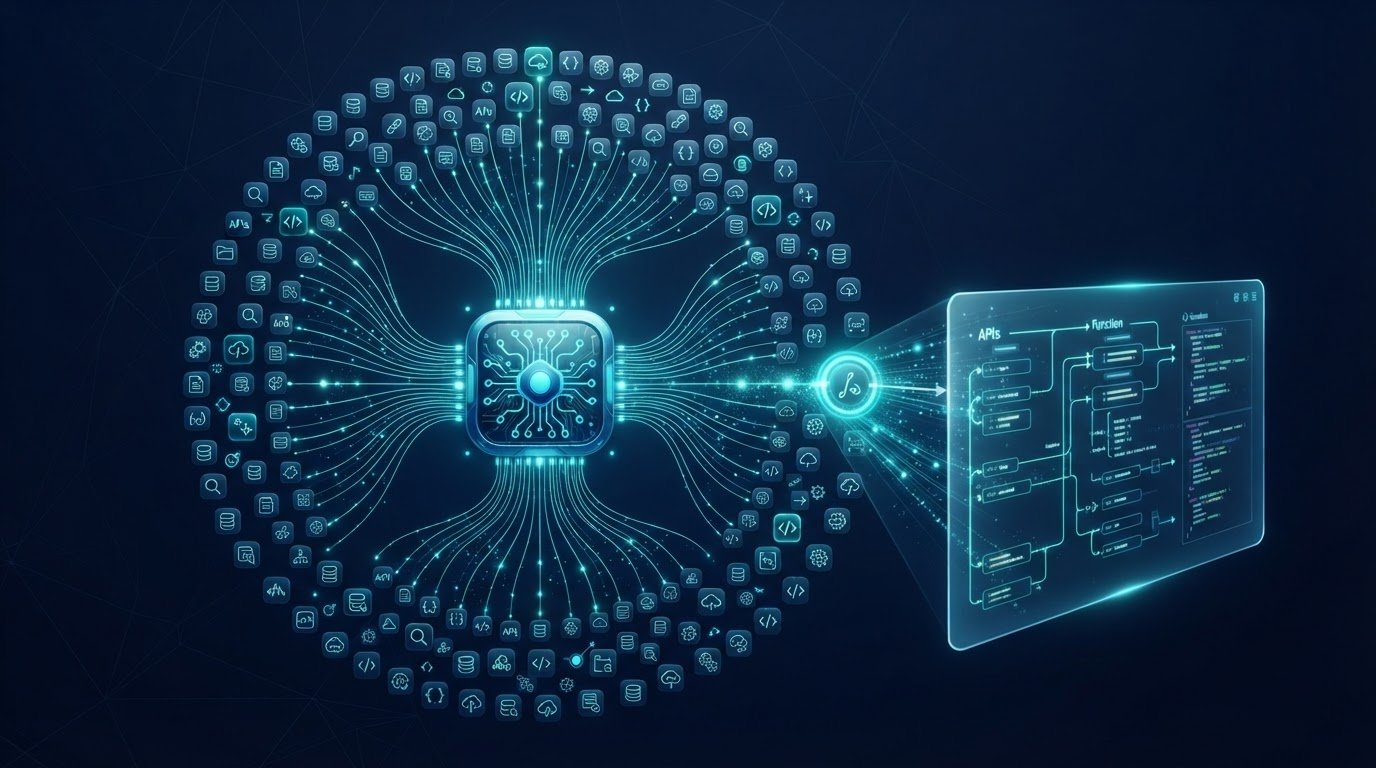

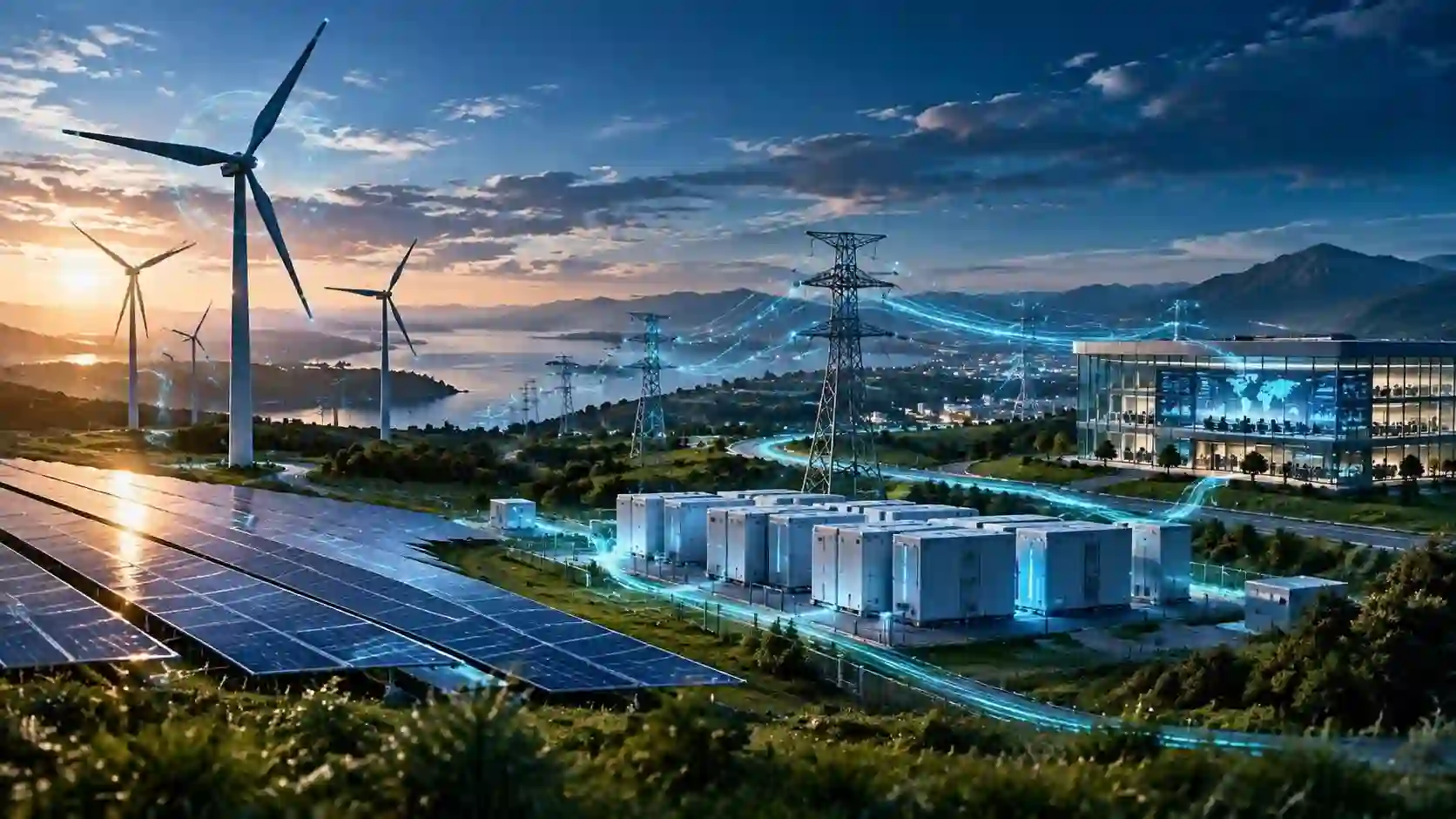
Electricity systems are changing quickly. Solar panels, wind farms, batteries, electric vehicles, flexible demand, and new large loads are making the balance between supply and demand more dynamic. At the same time, utilities must maintain reliability while upgrading networks that can be expensive and slow to expand. In 2026, artificial intelligence is becoming an important tool for forecasting, monitoring, planning, and operating these increasingly complex energy systems.
AI in energy is not one technology or a single application. It includes machine-learning forecasts for electricity demand and renewable generation, computer vision for inspecting infrastructure, optimization tools for battery dispatch, and decision-support systems for grid operators. The strongest near-term applications help people see problems earlier and make better-informed decisions. Allowing AI to directly control critical grid equipment requires a much higher level of testing, security, and accountability.
Why the energy sector is turning to AI in 2026
Power systems were traditionally planned around relatively predictable demand and large, centrally dispatched generators. Modern grids must also manage variable solar and wind output, distributed batteries, rooftop generation, electric-vehicle charging, heat pumps, and changing consumption patterns. Operators need to understand more data and more possible operating conditions than before.
The International Energy Agency’s 2026 report, Modernising Grids in the Age of Electricity, describes how digital tools and AI can improve forecasting, situational awareness, resilience, risk management, and the use of existing network capacity. It also highlights the two-way relationship between AI and electricity: AI can help grids operate more effectively, while data centres supporting AI add to electricity demand.
1. Smarter electricity demand forecasting
Electricity demand changes with temperature, time of day, economic activity, industrial schedules, holidays, and customer behaviour. Machine-learning models can combine historical meter readings with weather forecasts, calendar information, local conditions, and other operational signals to estimate demand at different time horizons.
Short-term forecasts help operators prepare for the next hours or days. Longer-term forecasts support investment and network planning. More granular predictions can help utilities understand where demand is likely to grow, rather than relying only on a national or regional total.
Forecast accuracy is not the only measure that matters. Energy providers should also examine forecast bias during extreme temperatures, performance across customer groups, uncertainty ranges, and whether the forecast improves decisions such as reserve planning or peak management.
2. Integrating solar and wind power
Solar and wind generation depend on weather conditions, which can change over short periods and vary across locations. AI models can analyse weather forecasts, satellite imagery, plant sensors, and historical generation to estimate how much electricity renewable assets are likely to produce.
Better forecasts can help grid operators schedule reserves, reduce avoidable curtailment, and coordinate flexible resources. Wind-farm operators can use predictive analytics to plan maintenance and identify performance changes. Solar operators can monitor output anomalies and detect possible equipment problems.
Forecasts should communicate uncertainty rather than present one number as certain. A cloud forecast can change, a turbine can trip, and local weather can differ from a regional model. Operators need contingency plans for forecast errors and sudden changes in renewable output.
3. Smart grids and real-time network monitoring
AI can help utilities make better use of information from smart meters, substations, sensors, protection systems, inspection images, and network-management platforms. Pattern-recognition systems can flag unusual readings, identify potential equipment degradation, and help engineers prioritize inspections.
Grid-enhancing technologies can increase the usable capacity of existing infrastructure in suitable conditions. AI can support these technologies by forecasting network conditions, identifying potential constraints, and screening operating options. The IEA notes that AI functions in this area include forecasting, detecting, diagnosing, prioritizing, simulating, and optimizing.
These applications are not a substitute for engineering limits or protection systems. A model’s recommendation must be checked against physical constraints, operational procedures, and the safety requirements of the specific network.
4. Battery storage and energy management
Battery energy storage can absorb electricity when supply is abundant and release it when demand is high or renewable generation falls. AI-assisted energy management can estimate demand, renewable output, electricity prices, and battery condition to help determine when to charge or discharge.
Optimization systems must balance several objectives: energy costs, battery degradation, reserve requirements, grid constraints, and commitments to electricity markets. A strategy that maximizes short-term revenue may not be best for battery life or system reliability.
AI can also support predictive maintenance by identifying unusual temperature, voltage, or performance patterns. Battery operators still need established safety systems, manufacturer limits, fire protection, and procedures for abnormal conditions.
5. Predictive maintenance for power infrastructure
Transformers, transmission lines, substations, turbines, and other energy assets require inspection and maintenance. Failures can be costly and disruptive. Machine-learning models can analyse sensor readings, maintenance histories, thermal images, acoustic signals, and inspection photographs to identify assets that may need attention.
Computer vision can help review drone and satellite imagery for vegetation encroachment, corrosion, visible damage, or other inspection findings. Predictive maintenance does not mean replacing scheduled inspections. It helps maintenance teams prioritize work and combine model alerts with engineering assessment.
6. AI for microgrids and distributed energy resources
Microgrids can combine local generation, storage, controllable loads, and a connection to the wider electricity network. AI-based energy management can help coordinate these resources according to demand, available generation, equipment constraints, and operating objectives.
Distributed energy resources (DERs), including rooftop solar, batteries, electric vehicles, and flexible loads, create new opportunities but also make distribution networks more complex. AI can help forecast local conditions and coordinate resources, provided utilities have adequate visibility, reliable communications, and clear control authority.
7. Digital twins and scenario planning
A digital twin is a digital representation of a physical asset, process, or network. In energy, it may represent a power plant, substation, distribution feeder, or wider electricity system. Connected to operational data, a digital twin can help engineers test scenarios such as equipment outages, extreme weather, new renewable connections, or changing demand.
AI can help process data, estimate system behaviour, and explore possible operating strategies. A 2026 review of AI-driven smart-grid optimization discusses the use of machine learning, renewable integration, storage optimization, and digital approaches for energy management. However, simulations must be validated against trusted engineering models and real operating data.
8. AI agents in energy operations: promise and caution
AI agents can use connected tools to complete multi-step tasks. In an energy company, a bounded agent might collect outage reports, summarize asset alerts, prepare a maintenance work order for review, or assemble a daily operations briefing. These administrative and decision-support tasks can reduce repetitive work.
More ambitious systems could help operators compare remedial actions or coordinate distributed resources. But an AI agent should not be given unrestricted authority over critical grid operations. The 2026 IEA analysis emphasizes that as AI moves closer to automated control, validation, explainability, cybersecurity, fallback rules, and accountability become more demanding.
AI and energy in Pakistan: opportunities for a changing power system
For Pakistan, AI applications could be relevant across demand forecasting, solar integration, distribution planning, loss detection, asset inspection, and battery management. Rapid growth in distributed solar and changing patterns of electricity use make accurate local forecasts and better network visibility increasingly valuable.
Potential projects should begin with practical data foundations: reliable feeder and meter information, consistent asset records, weather and generation data, and clear responsibility for maintaining datasets. Utilities and energy businesses can test focused applications such as transformer-health monitoring, solar-generation forecasting, or identifying unusual consumption patterns before attempting complex autonomous control.
AI is not a substitute for investment in transmission and distribution infrastructure, transparent regulation, skilled personnel, or sound utility operations. It can help make planning and existing assets more effective, but it cannot resolve structural problems by itself.
Benefits of AI in the energy sector
- Better forecasting: More informed estimates of electricity demand and renewable generation.
- Improved reliability: Earlier detection of faults, unusual conditions, and equipment degradation.
- Efficient asset use: Better visibility into network constraints and opportunities to use existing capacity.
- Renewable integration: Improved coordination of variable generation, storage, and flexible demand.
- Maintenance planning: More targeted inspections and maintenance priorities.
- Faster analysis: Scenario testing and decision support for engineers and grid operators.
Risks and challenges of AI in energy
Electricity is critical infrastructure, so an AI error can have consequences beyond a poor business forecast. Energy organizations must address:
- Data quality and coverage: Missing or inaccurate sensor data can produce unreliable predictions.
- Cybersecurity: Connected operational technology and data systems need strong identity, access, monitoring, and incident controls.
- Explainability: Engineers need to understand why a model raised an alert or recommended an action.
- Physical safety: AI outputs must respect grid limits, protection schemes, and approved operating procedures.
- Model drift: Equipment, weather patterns, customer behaviour, and network conditions change over time.
- Integration: Legacy operational systems may be difficult to connect and maintain.
- Accountability: Utilities must define who approves, executes, and reviews AI-assisted decisions.
How energy companies can adopt AI responsibly
1. Start with a clearly defined problem. Select a measurable use case such as load forecasting, asset inspection, or battery scheduling. Avoid deploying AI simply because the technology is available.
2. Establish a baseline. Record current forecast error, outage duration, maintenance cost, inspection coverage, or energy losses. Decide how success will be measured before the pilot begins.
3. Check data readiness. Confirm that data is accurate, timely, representative, and governed by clear ownership and access rules.
4. Test in a controlled environment. Compare model recommendations with existing engineering methods, test rare and extreme scenarios, and document failure modes.
5. Keep human oversight for high-impact decisions. Use approval gates, audit logs, access limits, and deterministic fallback procedures before allowing any system to affect operations.
6. Monitor continuously. Track performance, model drift, cybersecurity events, and operational outcomes. Revalidate models whenever equipment, data sources, or operating conditions change materially.
The future of AI in energy
AI will increasingly connect forecasting, asset monitoring, renewable integration, storage, and network planning. Research in 2026 is exploring explainable AI, multi-agent optimization, and more integrated approaches for renewable-dominant power systems. These developments could help energy systems coordinate a growing number of distributed resources.
The transition will be gradual. Forecasting, inspection, and planning support are easier to validate and are likely to scale ahead of fully autonomous control. Trustworthy deployment will require high-quality data, transparent evaluation, robust cybersecurity, and clear human accountability.
Frequently asked questions
How is AI used in the energy sector?
AI supports electricity demand forecasting, renewable generation prediction, grid monitoring, predictive maintenance, battery optimization, microgrid management, and energy-system planning.
Can AI improve renewable energy integration?
Yes. Forecasting solar and wind output more effectively can help operators plan reserves, coordinate storage, and manage changes in renewable generation. Results depend on data quality and how forecasts are used in operations.
Does AI control electricity grids?
AI is used in forecasting, monitoring, analysis, and selected operational workflows. Direct control of critical equipment requires stricter validation, cybersecurity, fallback systems, and accountable human oversight.
How can AI help reduce energy costs?
AI can improve forecasts, identify equipment problems earlier, optimize storage schedules, and help use network capacity more efficiently. Actual savings depend on local tariffs, infrastructure, operating practices, and implementation costs.
What is the biggest challenge for AI in energy?
Key challenges include data quality, cybersecurity, explainability, integration with legacy systems, model reliability under unusual conditions, and proving that recommendations are safe for critical infrastructure.
Research and further reading
- International Energy Agency: Modernising Grids in the Age of Electricity (2026)
- IEA: AI-Enhanced Solutions for Electricity Grids
- AI-Driven Control and Optimization for Renewable Energy Integration in Smart Grids (2026)
- Toward Unified Intelligence in Renewable-Dominant Power Systems (2026)
- AI-Enabled Operation of Power Grids Under High Penetration of Distributed Energy Resources (2026)
- Dependable AI for Electric Power Grid Operation Requires Staged Auditable Deployment (2026)
Related reading: AI Data Centers in 2026, AI Weather Forecasting in 2026, and Industrial AI in Manufacturing.